
The Overview Effect

Mother’s Day is one of those holidays that can hold two truths at once; it can be tender and beautiful, and it can also pry open some of the deepest wounds. For some, it brings a bouquet and a hug. For others, it brings a wave of grief, or a silence that has nowhere to go.
The UK already celebrated Mother’s Day this year. In Portugal, it was yesterday - the first Sunday in May. In the U.S., Canada, and Australia, it falls on the second Sunday in May. In Mexico, it’s always May 10th, which this year lands on the same day as the North American date - a rare convergence. Funny how often dates can become little reminders that life is both strangely organized and wildly uneven. And no matter which calendar you follow, this holiday has a way of finding the tender places inside you, the ones you don’t always know how to name.
For so many people, this holiday is not simple.
If you've had an abortion, Mother's Day can feel like being asked to applaud at a ceremony where your name was quietly removed from the program. Everyone around you rises to their feet, cheering, celebrating. And you rise too. Because what else do you do? But your hands barely touch. You hold a smile in place and hope it's convincing. But underneath it, you know that in another life, in another story, someone might have been cheering for you today. And no one in this crowd knows that. No one even knows to wonder.
The noise of everyone else's joy makes the silence around your own story almost unbearable.
From 250,000 Miles Away
Recently, four astronauts completed the first crewed mission to the moon’s orbit since 1972. And something happened up there that I can’t stop thinking about.
There’s a phenomenon that astronauts almost universally experience called the overview effect - a term coined in 1987 by author Frank White. It’s the cognitive and emotional shift that happens when you see Earth from space. Not as a concept. Not in a photo. It’s when your own eyes directly witness an impossibly tiny, glowing, blue, orb that is your home.
Astronaut Victor Glover, looking down at our planet from a quarter of a million miles away, said: “You look amazing, you look beautiful.”
He didn’t say, there’s a border I disagree with or there’s a country I’m afraid of. Because from that far away, there’s no division. There is only one planet - gorgeous and luminous.
When I imagine what that must be like, it’s as though ripples of love move through my body, from the core all the way to the edges, until they spill right out of me. I won’t pretend otherwise - it makes me want to cry.
The Perspective That Changes Everything
That overview effect? It’s the same shift I guide you toward in healing.
Because grief, shame, and pain have a way of collapsing your world down to a single, suffocating point of view. And healing - real healing - isn’t about dismissing what happened. It’s about rising high enough to see the whole picture. To hold your story from a perspective that is bigger than the one that could only hold pain.
You don’t have to travel to the moon to find that perspective. But you do have to be willing to rise.
The Crater Named Carroll
The astronauts on this mission only did a fly-by. They saw a side of the moon no human eyes had ever directly seen before. And when they noticed a couple of glowing craters, they asked mission control if they could name them. One they wanted to call Integrity, after their spacecraft. That feels right, doesn’t it? A name that carries craftsmanship, steadiness, honor, and the kind of tenacity that makes impossible things possible.
The second crater they asked to name Carroll, after mission commander Reid Wiseman’s late wife, who died of cancer in 2020 at the age of 46, leaving behind her husband and two daughters. This mother, whose absence is felt every single day by the people who loved her, is now memorialized on the surface of the moon. She is part of the cosmos now. Her name lives in a place no grief can reach and no time can erode.
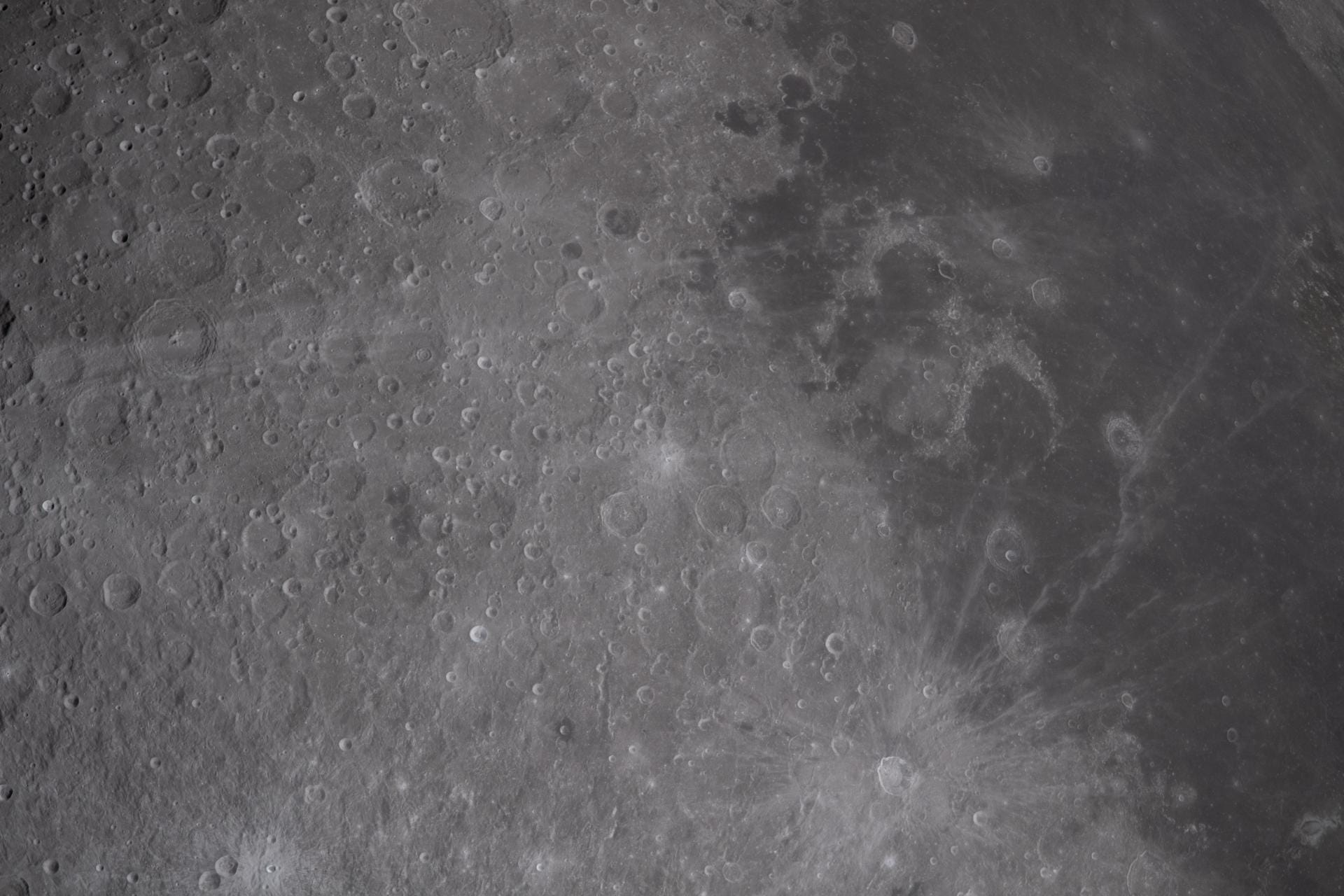
If you are a mother, you are always a mother. No death, no miscarriage, no abortion, and certainly no dark side can take that away from you.
These astronauts traveled to the dark side of the moon, the side we never see from Earth. But I think there may be something mistaken about calling it dark. Because if love can shine there, if memory can dwell there, if a mother’s name can be carried there, then perhaps it isn’t dark at all.
Perhaps it’s simply a place where we have not yet learned to look.
And from far enough away, there is no “other side” at all. Only the reach of love. Only one beautiful planet. Only one human family turning slowly through the dark, still lit by the ones we love.